Types of Mesothelioma: Biphasic, Desmoplastic, Testicular & All Cell Types
- There are four types of mesothelioma: pleural, peritoneal, pericardial, and testicular
- Pleural mesothelioma is by far the most common, affecting the lining of the lungs
- Each type has different symptoms, treatment options, and survival outlook
- All four types are caused by asbestos exposure and may qualify for legal compensation
- Epithelioid cell type is the most responsive to treatment across all mesothelioma types
The Four Types of Mesothelioma
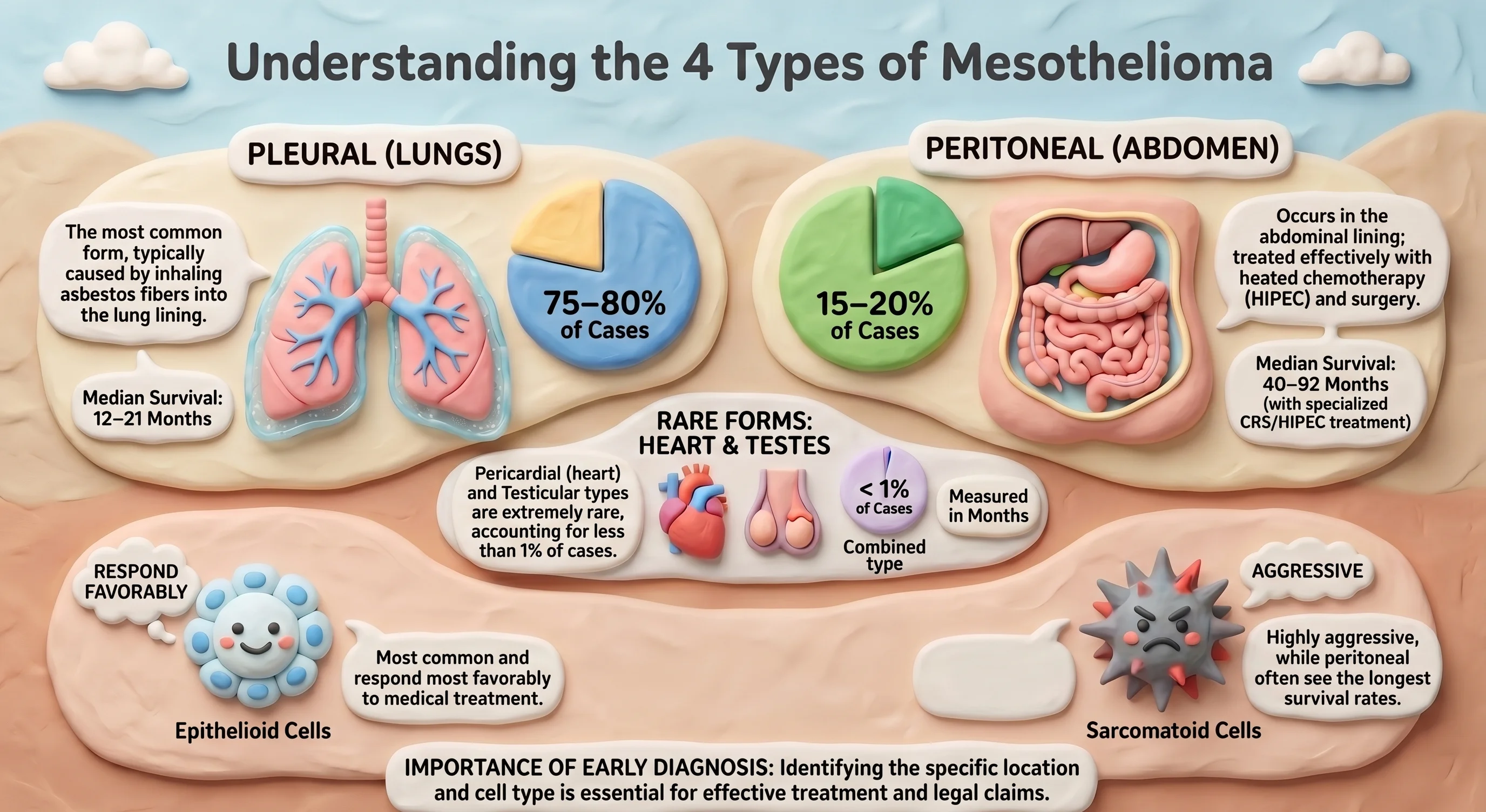
Mesothelioma is classified by the location in the body where cancer originates. The mesothelium — the thin protective tissue lining the body's internal cavities — can develop cancer in four distinct regions: around the lungs, around the abdomen, around the heart, and around the testes. Each of these produces a different type of mesothelioma with its own symptoms, treatment approaches, and prognosis.
Understanding which type of mesothelioma a patient has is essential for treatment planning, legal documentation, and building a compensation claim. All four types are caused by asbestos exposure, but the route of exposure and latency period can differ slightly depending on the type.
1. Pleural Mesothelioma (Most Common)
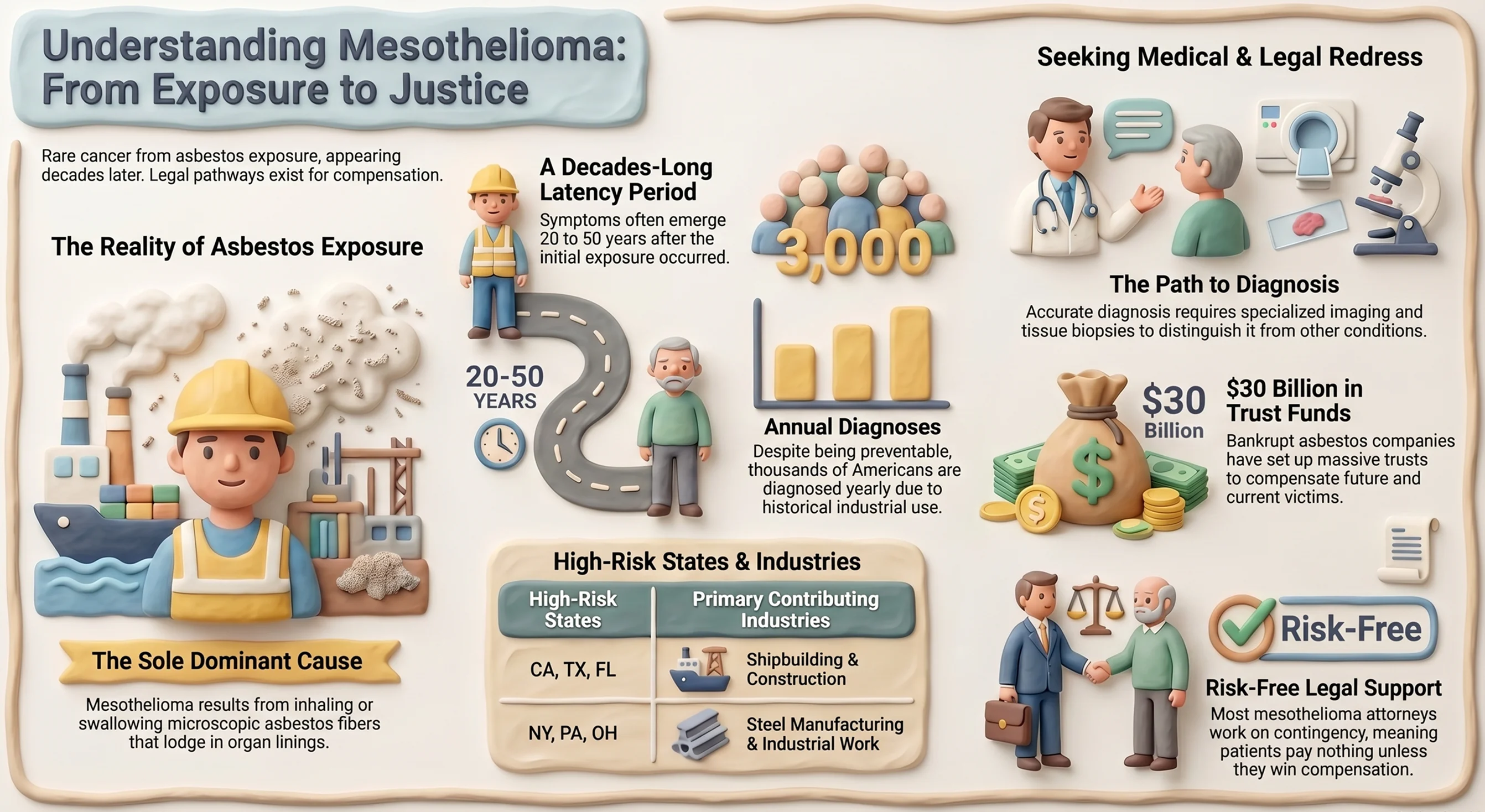
Pleural mesothelioma accounts for approximately 75 to 80 percent of all mesothelioma cases, making it by far the most common form. It develops in the pleura — the thin, two-layered membrane that surrounds the lungs and lines the inside of the chest cavity. This type of mesothelioma is most often caused by inhaling asbestos fibers, which travel deep into the lungs and become lodged in the pleural tissue.
Common symptoms include: shortness of breath, persistent chest pain (especially on one side), a dry or crackling cough, difficulty swallowing, hoarse voice, fatigue, and pleural effusion (a buildup of fluid between the layers of the pleura that compresses the lung). Many patients first notice that they can't take a deep breath without pain or discomfort.
Treatment options for pleural mesothelioma include surgery (pleurectomy/decortication or extrapleural pneumonectomy), chemotherapy (typically pemetrexed and cisplatin), radiation therapy, and increasingly, immunotherapy. The combination of surgery and chemotherapy, when the patient is a good surgical candidate, offers the best chance of extending survival.
Prognosis: The median survival for pleural mesothelioma is 12 to 21 months from diagnosis, though patients with early-stage disease and favorable cell types may survive significantly longer. Some patients treated at specialized mesothelioma centers have achieved long-term remission.
2. Peritoneal Mesothelioma
Peritoneal mesothelioma is the second most common type, affecting the peritoneum — the lining of the abdominal cavity. It accounts for roughly 15 to 20 percent of mesothelioma cases. Rather than being primarily inhaled, asbestos fibers in peritoneal mesothelioma are believed to be swallowed (or to migrate from the lungs via lymphatic channels) and lodge in the peritoneal tissue, causing inflammation and eventually cancerous changes over many decades.
Common symptoms include: abdominal pain and swelling, ascites (fluid accumulation in the abdomen), unexplained weight loss, nausea and vomiting, changes in bowel habits, and palpable lumps or masses in the abdomen. These symptoms are easy to attribute to other conditions — irritable bowel syndrome, hernia, or digestive disorders — which often delays accurate diagnosis.
Treatment: The most promising treatment for peritoneal mesothelioma is cytoreductive surgery (CRS) combined with heated intraperitoneal chemotherapy (HIPEC). In this procedure, surgeons remove as much visible tumor as possible from the abdominal cavity, then wash the abdomen with heated chemotherapy drugs to destroy remaining cancer cells. Patients who are eligible for this aggressive treatment have demonstrated survival rates significantly higher than other mesothelioma types.
Prognosis: Peritoneal mesothelioma patients who undergo CRS/HIPEC have shown median survival rates of 40 to 92 months — substantially better than pleural mesothelioma. Those who are not surgical candidates have a shorter median survival of approximately 6 to 12 months.
3. Pericardial Mesothelioma (Rare)
Pericardial mesothelioma originates in the pericardium — the double-layered sac that surrounds and protects the heart. It is extremely rare, accounting for fewer than 1 percent of all mesothelioma cases. Because it is so uncommon, relatively little clinical data exists, and treatment is largely based on case reports rather than large clinical trials.
Symptoms can include chest pain (often described as pressure rather than sharp pain), irregular heartbeat, difficulty breathing, cardiac tamponade (fluid buildup around the heart that compresses it), and extreme fatigue. These symptoms mimic many cardiac conditions, making early diagnosis particularly challenging.
Treatment is complicated by the tumor's location next to the heart. Surgery to remove the pericardium (pericardiectomy) may be possible in some cases to relieve symptoms, but complete surgical removal is rarely achievable. Chemotherapy and radiation may be used for palliation. Most patients diagnosed with pericardial mesothelioma receive supportive care focused on improving quality of life.
Prognosis for pericardial mesothelioma is generally poor, with median survival measured in months from diagnosis.
Any Type of Mesothelioma May Entitle You to Compensation
Regardless of which type of mesothelioma you or a loved one has been diagnosed with, you may have a legal claim. Connect with an attorney in your state for a free case review.
Find an Attorney in Your State4. Testicular Mesothelioma (Extremely Rare)
Testicular mesothelioma develops in the tunica vaginalis — the thin membrane surrounding the testes. It is the rarest form of mesothelioma, with fewer than 100 cases reported in the medical literature. Because so few cases exist, the link to asbestos exposure is less clearly defined than in other types, though the connection is still accepted in the medical and legal communities.
Symptoms typically include a painless lump or swelling in the scrotum, sometimes accompanied by a build-up of fluid (hydrocele). In many cases, testicular mesothelioma is discovered incidentally during surgery for another condition.
Treatment usually involves orchiectomy (surgical removal of the affected testicle) and may include chemotherapy or radiation. Because so few cases exist, there are no standardized treatment protocols, and patients are often treated at major cancer centers with expertise in rare cancers.
Prognosis is better than other types of mesothelioma, with a median survival of approximately 24 months or longer from diagnosis. However, the disease has a high rate of local recurrence, requiring ongoing monitoring.
Mesothelioma Cell Types: How They Affect Treatment and Prognosis
In addition to being categorized by location, mesothelioma tumors are also classified by their cell type — the microscopic appearance and behavior of the cancer cells. There are three main cell types:
- Epithelioid: The most common cell type (50–70% of cases), epithelioid cells are more cohesive and respond best to treatment. Patients with this cell type generally have the best prognosis.
- Sarcomatoid: The rarest and most aggressive cell type, sarcomatoid mesothelioma does not respond as well to most treatments and carries the shortest survival outlook.
- Biphasic (mixed): Contains a combination of epithelioid and sarcomatoid cells. Prognosis depends on the ratio — the more epithelioid cells present, the better the outlook.
Your pathology report will specify both the location type and the cell type of your mesothelioma. This information is essential for treatment planning and is also relevant to your legal case, as it helps establish the severity of your diagnosis and the expected impact on your life.
Frequently Asked Questions
Pleural mesothelioma, which affects the lining of the lungs, is the most common type, accounting for approximately 75–80% of all mesothelioma cases. It is primarily caused by inhaling asbestos fibers.
Peritoneal mesothelioma develops in the peritoneum — the thin tissue lining the abdomen. It accounts for about 15–20% of mesothelioma cases and is typically associated with swallowing asbestos fibers, which then migrate to the abdominal lining.
Pericardial mesothelioma, which affects the lining of the heart, is the rarest and most difficult type to treat. It accounts for less than 1% of cases. Surgery is rarely possible due to the location, and most treatment focuses on managing symptoms and improving quality of life.
The type of mesothelioma can inform the legal strategy but does not affect your right to pursue compensation. All types of mesothelioma are caused by asbestos exposure and can form the basis of a valid legal claim.
Prognosis depends on the type, stage, cell type, and overall health of the patient. Peritoneal mesothelioma treated with CRS/HIPEC has shown the best long-term survival outcomes. Pleural mesothelioma generally has a median survival of 12–21 months. Early diagnosis significantly improves outcomes.